All the lonely people, where do we all come from?
For all its objective brilliance as a piece of songcraft, something about “Eleanor Rigby” has always rubbed me just slightly the wrong way. I know now what that something is: it’s the “they”. As an account of the sad lives (and one sad death) of two lonely, lonely people it is serious and sincere, and commendably so, but it is also written from the perspective of an outsider. The only thing that can make a very lonely person even more lonely is to be recognized as such by someone who isn’t. The feeling is akin to realizing, in a private moment, that one has just had their picture taken from a long way away and can do nothing to erase it. I know this because I am one of those lonely people, and because I had this exact experience, once.
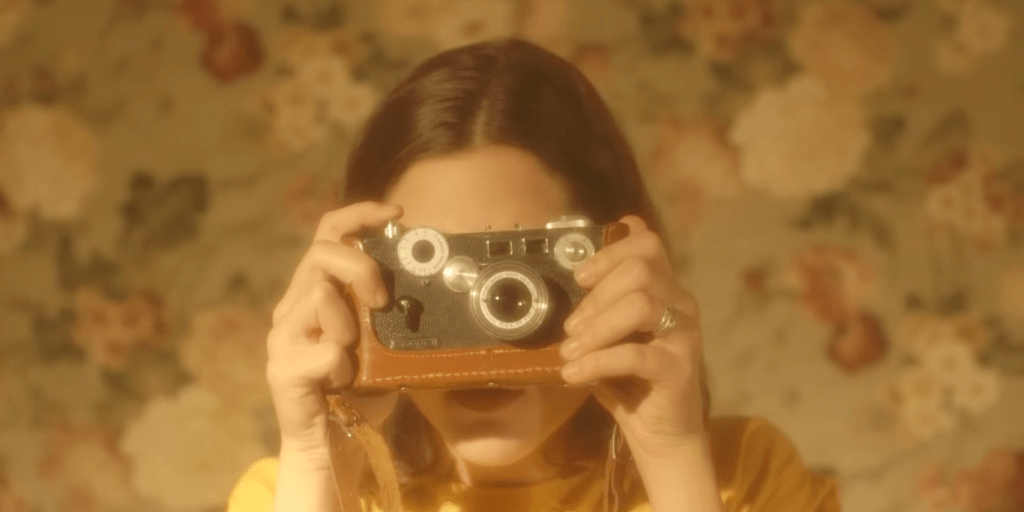
About two years ago, I was sitting on a bench overlooking the crowded green at the public university I was attending at the time. I was alone, as I almost invariably was at that time, writing in a notebook and enjoying the sun, and trying to enjoy being amongst people, though in a separate, detached sort of way. After a while I noticed out of my peripheral vision a girl with a camera, and long black hair which would have been windblown but for the strap tamping it down, a ways off, taking pictures of people on the green. Soon after I saw her, she saw me, and then it was almost as if I could see myself, in that moment, as she did: an isolated figure against a teeming ground, engaged in solitary activity among the chatting groups of people flowing around: in other words, as a subject. I had known from the minute I sat down that I would stand out, of course, as solitary figures in social places tend to (anyone who has ever gone to a pub, party, or restaurant alone knows this), but I had hoped that in being there, literally outside, I could escape at least the inward feeling, if not the outward appearance, of loneliness. Being seen so intensely prompted a small thrill-I hadn’t been noticed like that in a long time-but then she began to move; not towards me, but rather sideways, traversing, trying to get a head-on angle, to fix me in time with her camera, that great savior and thief.
I was trying to be invisible, and she, in taking my picture, was trying to prevent me from doing so. (This relates to another issue I have with “Eleanor Rigby” – the command to “look”.) We both failed, because as soon as I realized what was about to happen I stuffed my notebook into my backpack and walked away, walked home, back to the basement apartment where I was living at the time, alone. I suppose she did succeed in some sense, though: I remember very few individual experiences from my four years in university-mostly they appear all at once, as a blur-but I do remember this. By writing about it, and so making it real to myself for the first time, I thought perhaps I was trying to make her disappear; to let it go. Actually, I think what I want to do is to frame her in memory just as she framed my lonely self; to put us on an even footing. If I had let her take my photo, despite my discomfort, and if she had then had the uncommon grace to come up to me and offer to let me see it, I wouldn’t have wanted to. It would have hurt too much. I wish in a way that I had let it happen, if only so that, though in reality I wouldn’t have had the social courage to, I could have asked her, “why me?” (I’d like to ask Paul McCartney, too, but that’s a different realm of fanciful imagination altogether.)
What makes lonely people so interesting to look at, when we tend to be just about the last thing we ourselves would want to see? And why is it that this aversion to being seen is often coupled with an equally strong desire to in some way record the painful experience of loneliness? (Which is probably what I was doing in my notebook that day.) Is there a communal element to loneliness, some undercurrent connecting us lonely ones in a way that we can sense, that is real? I have felt its pull and I know the answer is yes, but what I do not understand is why we are so often unwilling to, or incapable of, making use of it. Why does this thread, which could be used to tie us together to the mast of the ship in storm or to save the ones who go overboard, go unfollowed, left hanging, or worse, end up being used as a noose? Why do we (certainly I) feel at times an isolating, truculent sense of possessiveness over our ‘own’ loneliness when it is so ubiquitous an experience, especially in today’s world? (As expressed, beautifully, by Charles Bradley in his song “Lonely As You Are” – “You think you’ve been lonely / but loneliness is mine.”) Why are we lonely at all? What is loneliness?
It is so easy to become lost in loneliness, and then, when you realize you are lost and decide to extricate yourself, to become mired in these endless, damningly impossible questions. You can spend your whole life in this wilderness (Bradley’s song was released posthumously, after he passed at the age of 68, apparently and despite great success and recognition as lonely as ever). If, like most, you don’t want to spend your life lonely, the only and most damning question becomes, “how do I-how do we-get out of here?” Well, to start with, since wandering around aimlessly seems to help no one, we could use a map.
A map of loneliness: this is how Olivia Laing describes their book The Lonely City. For my part, at least, I would also call it an utter relief. As books go, it is ‘unusually brave’, as the blurb on my edition’s cover helpfully reads, but it is also, somewhat belied by its ambitious form and tightly-researched, journalistic bent, a quiet and intimate one. Laing weaves the the stories of the artists in whom they immerse themselves with their own, and the strange parallels and points of contact (they live, multiple times, in apartments within a block or two and in some cases backed onto or literally in the former buildings of their subjects) that the palimpsestic nature of a city like New York can facilitate serve to blur the divide between the art they are observing and the life they are living (but, in the semi-detached state of loneliness, also to some degree merely observing). This approach embodies the reality that art, though universal, is also always, even in the case of Warhol’s mass productions, a piece of someone else that we can never fully understand or possess. And yet somehow these fragments which we collect become inextricable from our own selves and sense of being; we grow around them, twisting our own lives into a shape that follows their contours, necessarily broken and fractured, unique in its imperfection, which is to say human. Laing believes (and so do I) that this process of connection, capable of reaching even across the boundary between life and death, is a way of becoming less lonely: a way of letting others in.
The Lonely City (henceforth and, fittingly, TLC) is a testament to and document of Laing’s faith in this process, and, in its own way, a vulnerable one. The way in which anyone analyzes the art of others will always be in some way reflective of their inner self, sometimes more so than of the art itself, and the care with which Laing handles these pieces, remnants of their makers’ loneliness, makes their own self-acknowledged need-hunger, to use their word-for connection, their own loneliness, more pronounced and moving. The premise of TLC is that art, being simultaneously universal and totally unique (both in terms of the relationship its creator will have with it and the relationship anyone else might), is the perfect otherworld by which to explore loneliness, which itself embodies a similar dialectic of universality and isolation. The slight separation provided by the mediating membrane of art and analysis becomes, rather than a buffer of cold distance between the reader and Laing, a space for the cultivation of mutual intimacy: between Laing-who is moved by the lives and work of the artists but curates respectful relationships with them, avoiding the creeping danger of parasociality-and the artists, as well as between Laing and the audience. Art, Laing writes, is a way of “preparing oneself for the dangerous, lovely business of intimacy.” TLC is a living document of this process of preparation and an invitation for the reader to do the same.
I’m not sure that TLC is a map, really, for anyone except Olivia Laing. I’m not sure it can be. For us, it is more akin to a ship’s log: the record of a journey, unique to its journeyer and so unrepeatable, but physical proof that such a journey is possible. To make it, we must each venture out on our own. A fearful prospect, that unknown, but the crushing fate awaiting those who will not embark is, though not the explicit focus of Laing’s book, ever-present.
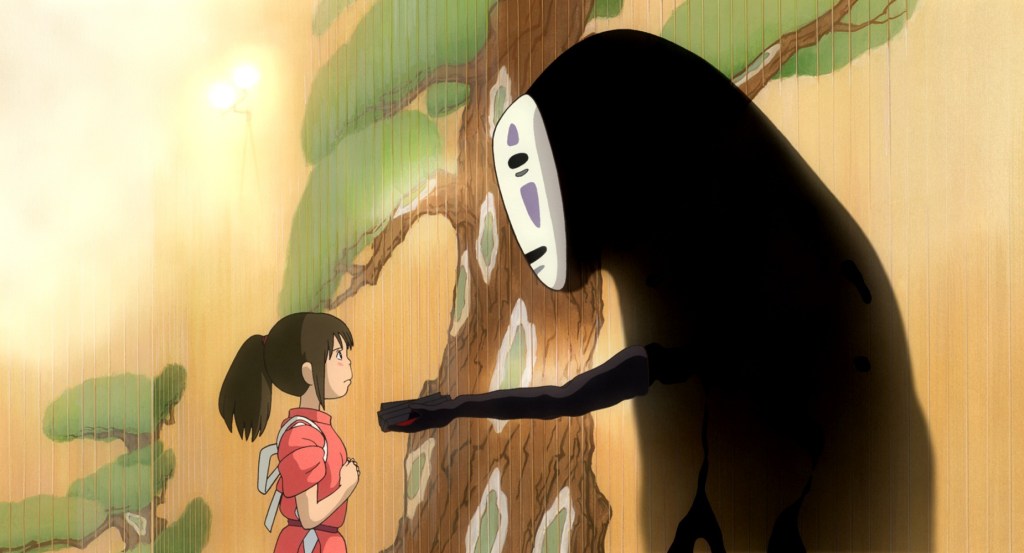
Ever-present, and personified by Andy Warhol. Of all the stories woven into TLC, all of which involve suffering-Edward Hopper’s unpleasant, silent sublimity, David Wojnarowicz’s blazing, beautiful prose and unjust death, Henry Darger’s unappreciated and hermetic devotion-Warhol’s was the only one which genuinely scared me. It seemed to me that he was desperate to escape his loneliness and yet too afraid of being without it, his most constant companion, to cast out in search of some other life. He spent nearly all of his time and energy preparing for the voyage, at times taking a few steps onto the gangplank, until, it seems, he became resigned to his loneliness, even accepting of it. In some small ways he managed to break its hold but never for good. He never shook his fear of death-the ultimate state of aloneness-either, and it is this, Laing postulates, that drove his creation of the Time Capsules. They were physical placeholders, a means of preparing “for the case against death.” For Warhol, attempting to leave his loneliness behind would itself have been a kind of death: the death of his hermetically sealed self. To open oneself up to others is to accept a great deal of pain: inevitable influence and insult, the damage we do to one another, the parasitic and predatory impulses of some, the genuine benevolence and sincerity of a few. In protecting himself as he did, Warhol turned himself into an ouroboros, an autophage: feeding on others, yes (hence the nickname Drella) but most of all on himself. The Time Capsules, his endless purchases, his recordings, and his photographs, can all be viewed as food for an insatiable hunger (I can’t help but think of No Face, from Spirited Away, who is agonizingly lonely, and not in truth a monster at all.)
The irony, of course, is that for all his fear of, and protection against, death and aloneness he still ended up shot, lying in hospital, “clinically dead for one and a half minutes, flung out of life altogether”. A traumatic assassination attempt is not something most of us are likely to experience, thankfully, but, as Laing takes care to note, loneliness is just as capable, though in a less dramatic fashion, of killing us: “loneliness predicts increased morbidity and mortality, which is an elegant way of saying that loneliness can prove fatal.” As fatal as the personal violence inflicted on Warhol by Solanas, and the (debatably) more impersonal violence inflicted on Solanas by society, the direct cause of her painful and inhumane death.
Warhol’s instinct for self-preservation (preservation – “the activity or process of keeping something valued alive, intact, or free from damage or decay”) is a primordial one. There is no shame in it. What is new, and corroding (even more rapidly now than in 2016, the year of TLC‘s publication) the very fabric of our shared humanity, is the extent to which we can mediate our lives through boxes of glass, aluminum, and silicon. ‘Can’ is actually the wrong word: often we must. At a recent visit to a bar with a friend we were required, while sitting about fifteen feet from the kitchen, to order our burgers through a QR code on the table. We were both bemused. I felt sad. Laing addresses their use of the internet quite directly, noting how it slides from being a tool for mitigating their loneliness-via Twitter report, information rabbit holes and Craigslist dating ads-to an abetter of it, the screen blocking out enough natural light for it to fester and thrive. Now, ten years later, we are still dealing not just with the internal city of loneliness and this unreal city of the internet, each growing increasingly inseparable from the other, but also with the unappealing task of squaring those two hyper-related and potentially all-consuming worlds with the ever-less-vibrant and imperiled world of Earth, our physical reality. With the advent of nuclear weapons it become possible, to paraphrase William Carlos Williams, to realize our own wish for physical self-destruction. With the onrush of AI and its integration, as with the internet, into every facet of our lives, it seems we may have created a means by which to realize our wish for the obliteration of our minds, our selves.
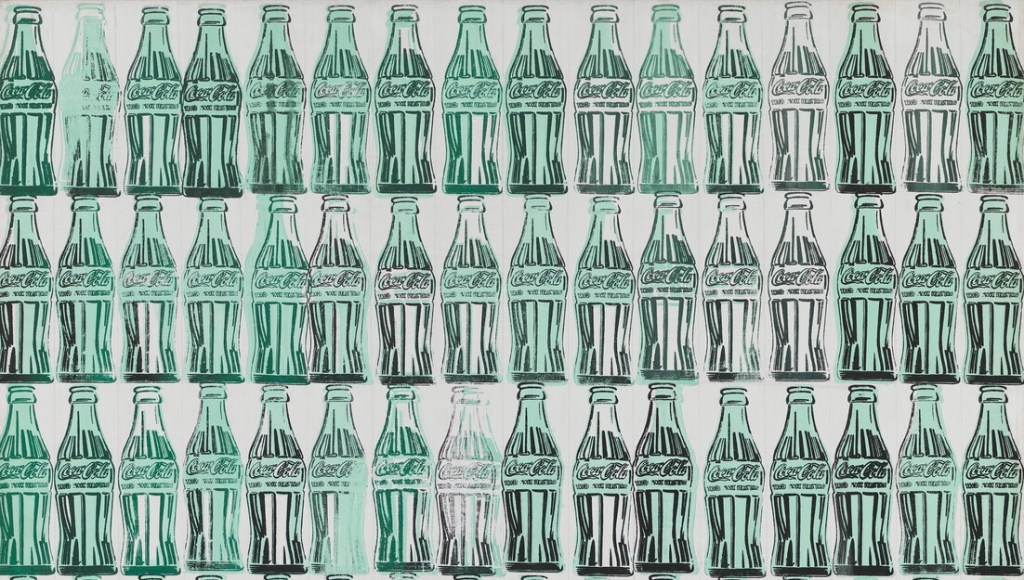
This present is a future Warhol could not have dreamed of, but might-although I wonder-have happily chosen, given the option. There is nothing which cannot now be observed and indirectly participated in, from a livestream of his grave (chronicled by Radu Jude in his film Sleep #2) to state-sanctioned murder, depending on your taste. Inversely, it is now impossible for anyone to entirely avoid being observed. This Warhol may have had a problem with. As Laing writes, he structured his entire life and later artistic practice around observing without participating, recording without implicating himself (implicitly impossible, of course), experiencing without risking, and ultimately attempting to, via his tape recorders and cameras, be “liberated from human feeling, human need, which is to say the need to be cherished or loved.” This was something for which he had to strive, which required effort, and which was only made possible by technology: “Warhol could not have achieved his blankness, his enviable detachment, without the use of these charismatic substitutes for human intimacy and love.” His loneliness itself was in some sense a monument, a work of art as well as a waystone on the road of human progress (towards what, exactly, we might ask?). This once-apex of detachment is now our baseline, no longer an achievement but instead a default state, almost unworthy of note. As Warhol wrote in The Philosophy of Andy Warhol, “All the cokes are the same and they’re all good.” All of us are detached, and we’re all suffering.
Warhol’s wish was an asymptotic one: he wanted to remove himself from even the state of removal, to achieve a kind of nonexistence. I understand this desire, and so does Laing:
“I wanted very much not to be where I was. In fact part of the trouble seemed to be that where I was wasn’t anywhere at all. My life felt empty and unreal and I was embarrassed about its thinness… I felt like I was in danger of vanishing, though at the same time the feelings I had were so raw and overwhelming that I often wished I could find a way of losing myself altogether, perhaps for a few months, until the intensity diminished.”
And yet: my own desire for the closeness I did not feel, and, I sometimes thought, was incapable of feeling, has always-always-been stronger, if only just, than my desire to be nothing at all. Just as our will to live exists in relation to the constant presence of death, (of which we are aware in its absence), so is loneliness inextricable from our awareness of the vacancy in which the intimacy we are lacking should be. When we inhabit this negative space we cannot help but be aware of what was, once, and could still be, the traces it has left, traces of possibility.
“We think of the key, each in his prison
Thinking of the key, each confirms a prison” (Eliot)
A prison, maybe, but better an oubliette, like the bottom of a well, with a pinprick hole in the ceiling that lets a little shaft of light in. This light an absence of its own, the absence of the negative, which isn’t to say the positive, but rather its possibility. Every once in a while, a rope-that thread again-is dropped down to us. It hangs there, a lifeline, pulsing, a series of coded tugs signaling that someone-perhaps a very far away someone, or perhaps someone very, very close, for how are we to know? It’s dark down there-is holding the other end. We can take it, tying ourselves to possibility-the possibility of escape, of being held-but we have to hold on tight, for dear life.
Only, what if we never escape? Even if we do, I don’t think any of us makes that daring, dangerous leap without leaving a piece of ourselves behind, and what will happen to it, down there in the oubliette? I don’t know. I do know, being a fool, that it is a fool’s errand to go back down there voluntarily, looking for it-stuck again-and I think maybe we are better for the loss. Nothing is free. You cannot live without loss, and no accumulation of any kind-of stuff, like Warhol, or string, like Darger, or sex, like Wojnarowicz, or experience, or money-will ever make it up. These attempts to, which of course we all make anyhow, are manifestations of what is missing: that part of ourselves which is still stuck down there. In some way it may be that bifurcation which keeps us tethered, held together by the tension between loneliness and life in others: one part of us always reminded that we are dying, that we exist in time, in the inexorable cycle of night and day in which something is always slipping away, always afraid, and the other always in the act of escaping, with nothing to lose, dreaming of all that fear, of all those nights and days. A delicate, vertiginous balance, more terrifying to some than others, but one absolutely worth choosing the leap for. And the leap is always a choice; it must be made, more or less, consciously. It seems we are becoming increasingly fearful of, and fighting increasingly harder to protect ourselves from, having to make this choice at all; indeed, the ultimate goal of some seems to become unconscious of ever having had a choice in the first place. If we are forced, on a societal scale, to choose between the seeming certainty of self preservation and the uncertain possibility of everything else, I fear we will choose the former.
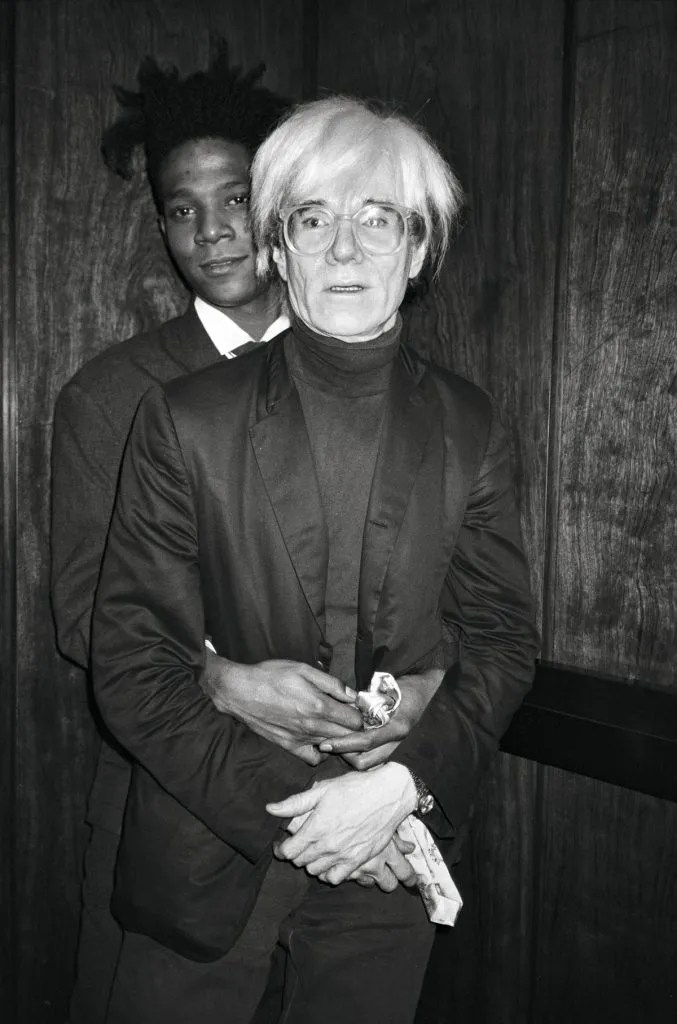
And so, in another instance of the paradoxically communal nature of loneliness, we here in 2026 are all stuck, to varying degrees, in the same fix as Warhol. His awareness that he could choose was, I think, the source of much of his torment. For most of his life he chose self-preservation. I do not begrudge him that: at least, in contrast to our current vogue of anesthetized passivity, he exercised (and with extreme commitment) his agency. Even while cringing empathetically at the pain his choice caused him we can only marvel at the vibrant, prolific, and in some ways exceedingly generous ecosystem of the carapacial outer life he built around the loneliness of his inner one. And we must also recognize, as Laing takes pains to note, that in his later years he made clear attempts to breach his loneliness, most notably in his friendship with Jean-Michel Basquiat. He allowed a part of himself to escape, to be held. He made a leap. He was brave.
Warhol, as I wrote above, scares me, but only because I recognize some of his tendencies in myself. Laing’s consummate empathy towards and understanding of him as both an artist and a human being affirmed my fear and confirmed that the choice to truly be with others-the choice that Warhol, at the end of his life, so bravely made-is the only one. You cannot rid yourself of loneliness by hiding in the shadows of your own mind for even they are cast by the lives of others, the second lives they have taken up within you. You were once such a life, existing within another, and your body remembers. You can run from yourself but always and only in a circle-an ouroboros-endlessly yourself, ending in the same place you began.
Just this knowledge, understood but untested in action, gets you nowhere, of course, just as studying a map, however intently, will not deposit you at your desired destination. Reading about loneliness will not allow those who have never truly been lonely (I was shocked to discover, around the age of eighteen, that such people exist. At the risk of generalizing, I don’t think it is entirely coincidental that the least lonely people I have ever known were often some of the least interested in art.) to understand what it is like, nor can it magically cure those of us who are. Laing, knowing this, does not presume to include in their map directions to a path that leads out of the wilderness: no one such path exists. What they do include is a collection of landmarks, of waystones and cairns, the locations of oases and institutions of ill repute; a ledger of those whom you can trust, whose path you can follow, those whom, lovable as they may be, are best not to follow, and accounts of those who, like Warhol, took along their way certain turns from which it can be nearly impossible to return. It is an artifact for us, just as the archived collection of Wojnarowicz’s found objects was for them, and it is one of value, both a treasure and a tool. The very fact of its existence points towards survival: if you read and trust in it, and the ongoing process of labor and love from which it was born, it can keep you going while you wait for things to shift, for loneliness to lift. And one fine morning…
As Laing says, in the book’s final line, “the time for feeling will not last.” This phrase, suggestive of so many nightmares-a reminder of death’s inevitability (scary), a reminder of those times in our lives when the possibility of feeling anything at all seems in danger of dipping below the horizon completely (terrifying), a reminder of capitalism’s seeming will (and ultimately, need) to stamp out the involvement of emotions in any aspect of human life (existentially threatening)-is also possible to read as an utter relief. Relief that all those nightmares will come to pass, and then, because they must, end. Relief that what we are seeing and feeling in these times is real, they see it too. Relief by way of hope and joy of the kind Laing shows us can spring, despite every privation, harm, and act of violence that the people in this book are subjected to, from the knowledge that loneliness is many things, sometimes almost everything, but it is never final.
Even in their writing on AIDS-all the more bleakly true in the wake of COVID, when hate towards Asian people surged in the West just as it did against gay people in the 80s, in both cases fomenting from the same festering swamp of fear-they are able to conjure up, if not hope, then life. For David Wojnarowicz, for Peter Hujar, for Klaus Nomi, AIDS, catalyzed in comorbid fashion by loneliness, was a death sentence-final-but only for their physical forms. In their work they are still very much alive, and not at all alone. Laing’s book suggests that loneliness, for all its seeming interminability, is-even if it lasts a life long-temporary. Art will outlast it, always, and as such it is art which we must cling to as a shield in these dark and absurd times and not loneliness, which though initially protective will ultimately entomb. TLC urges us, to paraphrase billy woods, not to make a keepsake out of grief, but instead to make from it a gift. A gift can be brutal and painful (the Ashes Action march on the White House), ironic and enshrouding (Wojnarowicz’s Rimbaud in New York series, and Emily Roysdon’s (now EOH) subsequent remakes), strange and to some, deviant (Darger’s paintings) or a neurotic, meticulous product of craft (Hopper’s paintings) – ultimately, it doesn’t matter. What matters is the work, and doing it honestly, secure in the knowledge that to save something-a piece of yourself-and send it out into the world is to ensure that you will never be truly alone.
One of the last lines in the book, and one of the most true, is this: ‘There are so many things that art can’t do’. I agree. This book will not cure anyone, this book will not stop whatever is coming down the pike for humanity in the fearful future, and, to take things to the point of the absurdity that debates about the usefulness of art inevitably devolve into, this book will assuredly fail to stop the universe from playing the ultimate trump card of solar implosion, in which everything humankind has ever produced will go up (or down? Somewhere, or nowhere? Who knows!) in flames. In its quiet and intimate and, yes, ‘unusually brave’ way, though, The Lonely City is to me a testament to what art can do.
This book did not teach me anything about loneliness that I did not already know from personal experience. What it did do was see me, and in an exact inversion-in the negative-of the way in which I was seen by that girl on the green two years ago. It saw me after I had spent a long time believing that I did not want to be seen at all, and showed me that I do want to be seen, that I need to be, but in a way that will allow me to see myself more clearly, and honestly. Without shame, without pain, without pity. I think this is called acceptance.
I have spent about half of my life lonely, in one way or another. In high school, finding myself ill-fitted for an all-male environment and disdainful of the paper-thin boys trying too hard to be men-athletes and future frat ‘brothers’, future hedge fund managers and the sons of current hedge fund managers, the sons of men of fifty on whom life after eighteen seemed to have made no impression-yet for some reason unwilling to caucus in solidarity with the other misfits, I withdrew into myself and my own world, making a conscious (and largely successful) attempt at translucence. Even in a relatively small, clique-based school, I managed to have no enemies, no real friends, and maintain an almost total detachment of my outward presentation from my inner, lived reality. This prepared me in the worst possible way for university, where, even given the blank slate provided by several thousand miles of distance, I failed again, for four more years. I made some lovely acquaintances, some of them punishingly lonely themselves, but almost never allowed any of them to come close. The cold mindset of survival-Warhol’s urge for self-preservation-became, when mixed with the genuine pleasure I felt in solitude, an intoxicating poison. I told myself I needed no one; this did not, of course, stop me from wanting someone. Wants and needs, I reasoned, are different, and needn’t interfere with one another. A fine thought, only I had underestimated the depth at which the human need for connection runs, and my needs, warped, and my wants, self-denied, both buried under layers of isolation, began to blur into each other in Schrödingerian fashion. Everything became confused, nothing felt true, I felt dead in life, and in a way I got what I wanted: I could no longer see or understand myself at all.
Unsurprisingly, I failed spectacularly and utterly at every romantic relationship, using the pain and confusion of one failure as fuel for the excitement of the next soon-to-be, throwing myself from one wall of the oubliette into the other, absurd, possessed of a need to heal the pain of every (inevitably also damaged) person I encountered and a blunt knack for confusing and hurting those same people when I ended things. And it was always me, and always in what must have been a blindsiding, seemingly unprompted fashion. Eventually I began to accept my confinement, committing only to relationships where no commitment was required, those which I could be fairly certain would fizzle in a matter of months, if not weeks. Even those have almost lost their appeal. Desire is something which, at the age of twenty-two, comes to me only in rare, brief flashes. I want to be loved, but I don’t know how, and for now this seems the better way.
The loneliness that was wearing away at me would always, without release, eventually make a break for it, physically: in private fits of rage, patterns of self harm, and almost uncontrollably thrashing, tearful muscle fits after which I would lie, fetal, in bed, staring at the wall. Yet even as these dark waves were eating away at my life they were depositing material on the shore. Crushed and broken, and in such fragmentary forms as to be scarcely usable, but no less real. Eventually, in the ways in which I could, I started to use this material to build. I’m still building, and I’m still not sure what. Myself, maybe.
“These fragments I have shored against my ruins.” (Eliot)
Lately my life has, as they promised it would, gotten better. I live now with roommates, whom I like very much, and am studying for an MFA. I can channel those feelings through art, now, for the most part: through music, poetry, through this. Loneliness has not left me; I do not think it ever will. Frankly, I’ve gotten used to it. It is as constant a companion as I have ever known, and its constancy alone, if not the quality of its company, is something for which I am grateful. It will always have a place in me, and I will always have a place in it: to quote Laing quoting Dennis Wilson, a very special one.
And now, and I’m sorry it took so long, for the fun bit:
One of the joys of my first read-through of The Lonely City was discovering Henry Darger and the process by which he created his intensely hermetic and personal body of work. I not only work often with collage, both in my music and in these kinds of multimedia essays, but in a certain sense I also consider my life itself to be a collage. I tend to live so much in art of all kinds, whether out of love, intellectual interest, or the need for a defense against (or for) the world, that I find I can consciously construct elements of my identity, personality, and path by gathering and recombining these pieces, picked up from every possible source. Mixed with the bits of myself that are still intact, and often using memory as mortar, they become a levee: a bulwark against the forces that would otherwise have worn me away. A kind of memoryware, against despair and the cold air of loneliness and depression. It’s a bit of a mess, but it’s my mess, and it is more concretely me than anything else, more me than even my body, I think.
There’s an obvious comparison to be made with the way in which birds construct their nests, hence my choice of name for this writing project I’ve started. I understand the birds: they
don’t build their nests for the sake of entertainment (although maybe in some way they do, and why not?), they do it because they have to. Because it is in their nature. They may be proud of a particular twig or a shiny bit of foil that they’ve gathered, but ultimately it is just more material for the nest. And even if the nest is a pretty one (though who are we to judge? Do birds have their own aesthetic sensibility of which we are unaware, to which they are constantly subjecting us?) they are building it primarily so that they don’t die. It’s a matter of survival. (There he is again, inescapable: Warhol, with his time capsules.)
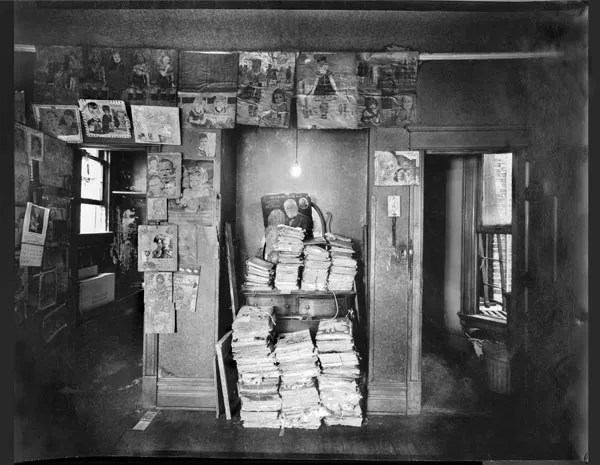
When I read in TLC about Darger and his process, grounded in collage-he collected thousands images from different sources, sorting them and recombining them, developing relationships with certain fragments of important, piecing together these physically real markers of his existence-about which Laing writes the following:
“It mattered to him, this act of integration, of devoted labor, of taken care. The reparative impulse, Klein called it: a process that she believed involved enjoyment, gratitude, generosity; perhaps even love.”
I felt that they could have been writing about me. This is what all of my own creative work is merely a manifestation of an and excuse for: the messy, absurd process of recombination, of weaving straw in the wind while it tries to blow everything away (perhaps Darger’s obsession with tornadoes was not random, or merely a product of growing up in the Midwest). It keeps me warm, keeps me moving, keeps me in love with art, keeps me alive. It seems to me that Laing feels similarly, and so much of my joy at finding this book stemmed from finding another kindred spirit-someone out there doing exactly the kind of work I find I need to do, and in such an honest, unpretentious way. I think of their friend Larry’s endlessly woven cape, a thing of no practical use but which Laing “liked living alongside”. Some kind of life must emanate from it, from the traces of human hands running over the fabric for uncounted hours, weaving, stitching, holding the world together. Laing again:
“Loneliness… arises out of an understanding, however deeply buried or defended against, that the self has been broken into fragments, some of which are missing, cast out into the world. But how do you put the broken pieces back together? Isn’t that where art comes in, and in particular the art of collage, the repetitive task, day by day and year by year, of soldering torn or sundered images together?”
Yes. As such, it felt important and fitting to me, especially given the upcoming ten-year anniversary of The Lonely City‘s publication, to put together a mix of some of the music I love which feels in conversation with the book. As these things tend to do, my mix ballooned, and so I’ve split it into two: the first mix of twenty four tracks represents, loosely and in a vaguely narrative way, a sort of night and day cycle of an inhabitant of the lonely city. This is not, of course, to be taken literally: it merely provided me a framework within which to work. The second is more loosely structured and consists of songs which I wanted to include in the first mix but was unable to for whatever reason (numbering among them are several of the songs specifically mentioned by Laing in their book and, grudgingly, “Eleanor Rigby”) and the connections between tracks are mostly just musical, rather than narrative. The associations between some of these songs and the idea of the lonely city is, like loneliness itself, personal and may not make any kind of objective sense. As with loneliness, I’ve come to accept that.
A few notes:
First: I am dedicating this essay, for what it’s worth, to the lives of Renée Good and Alex Pretti. I used to be a bit judgmental about the privilege that I saw as implicit in art that wasn’t in some way directly political during or responsive to times of crisis, even as I believed (and still do) that explicitly political or ‘protest’ art, especially music, the medium in which I do most of my work, is almost totally powerless to affect change. Obviously this is a contradictory position to hold, and a totalitarian one, given that I cannot remember a time in my life when my country, and the world at large, has not been engulfed in multiple crises of one kind or another, whether political or (a given at this point) environmental. I believe now that almost all art not classifiable as propaganda is protest art. To spend any of your increasingly limited time on this planet trying to make something that has at least some chance of positively impacting someone’s life, and to do so during days like these, with no guarantee of any reward or return, is to work towards the possibility of a better future and thus to affirm that such a future is possible and worth fighting for. The work of art is a manifestation of the belief, and faith, that art will and must outlive every one of the brute, murderous, and ultimately mortal wannabe-Nazi cowards currently attempting to start a second civil war in the United States. Art matters, absolutely, but it also matters how you make it. We must, each one of us, refuse to be a Furtwängler, or a Karajan, or a Wodehouse, copping out either by claiming to be in service to the higher god of art (bullshit – art comes from us, the people), or by joining the party ranks in order to preserve one’s career, only to slip the jackboots off when they become unfashionable, or by feigning ignorance. I am not a religious person, but I will offer up one heartfelt prayer: if there’s a hell below, that is where I want to go, so I can spend eternity watching the executioners-those in masks, those in elected office, and those who put them there-of Alex and Renee and untold others-like you, like me-reap their reward and weep.
Second: For anyone interested in or already a fan of The Lonely City, I would highly recommend Shaun Tan’s book Tales from the Inner City, especially for those who like an extra helping of art with their daily diet of words, and/or who really like animals.
Third: (Copyright/IP notice)
I make no claim to ownership of any of the material cited in this piece. All credit to respective creators. Please don’t sue me – this makes me absolutely no money.
Lonely City Songs
Lonely City Songs – The Misfits
Tracklist:
Lonely City Songs 1. After Hours - The Velvet Underground 2. Symphony No. 2 'The Age of Anxiety' (Prelude) - Leonard Bernstein 3. Expecting - Andy Stott 4. Rapunzal - billy woods and Moor Mother 5. Untitled Ballad - Hasaan Ibn Ali 6. Living Room - Grouper 7. Hand Covers Bruise - Trent Reznor and Atticus Ross 8. Something Wild in the City: Mary Ann's Theme - Morton Feldman 9. Survive It - Ghostpoet 10. Alone at the Danube River - Dirty Beaches 11. In McDonalds - Burial 12. Transit - Fennesz and David Sylvian 13. Good Morning, Midnight - Jóhann Jóhannsson 14. All Alone - Mal Waldron 15. Aberdeen - Felicia Atkinson and Sylvain Chauveau 16. Atmosphere - Joy Division 17. Floating - Mac Miller 18. I Think I'll Call It Morning - Gil Scott-Heron 19. Meet Me in the City - Junior Kimbrough 20. Lord Knows Best - Dirty Beaches 21. Yefkir Engurguro (Maribou State Mix) - Hailu Mergia 22. Glass Eyes - Radiohead 23. Perfect Day - Lou Reed 24. World - Julia HolterLonely City Songs - The Misfits 25. Flight from the City - Jóhann Jóhannsson 26. There, There - Radiohead 27. Lost - Frank Ocean 28. Baltimore - Nina Simone 29. It's Raining Today - Scott Walker 30. Thoughts of You - Dennis Wilson 31. Phone Call - Jon Brion 32. Nomi Song - Klaus Nomi 33. Lonely Woman - Ornette Coleman 34. No rEgrets - Aesop Rock 35. Eleanor Rigby - The Beatles 36. For Emily, Whenever I May Find Her - Simon & Garfunkel 37. Sleepwalker - Julie Byrne 38. Go Outside - Cults 39. Central Park - billy woods (w/ DJ Addikt) 40. Numb - Portishead 41. Wake Up Alone (Original Recording) - Amy Winehouse 42. Pigeonfeet - MIKE 43. ナイトクルージング (Night Cruising) - Fishmans 44. Amongster - POLIÇA 45. Finish Your Collapse And Stay For Breakfast - Broken Social Scene 46. Sunday Morning - The Velvet Underground and Nico 47. Love Comes Back - Arthur Russell 48. 22 (OVER S∞∞N) - Bon Iver
 Mr Magpie
Leave a comment